Why Theatre Must Become a Core Component of School Education in India
India need not replicate international models. It can draw upon its own dramatic heritage through classroom adaptations of Mudrarakshasa to explore governance and diplomacy, or Abhigyanshakuntalam to introduce students to classical literature and aesthetics.
Imagine asking a fish to climb a tree and then judging its intelligence by how well it succeeds. The analogy, often attributed to Albert Einstein, captures one of the biggest shortcomings of modern education. When every child is evaluated through the narrow lens of exams and marks, many talents remain in hiding or turn invisible. Real world capabilities- creativity, empathy, communication and imagination go unmeasured and unvalued in front of the ability to reproduce textbook answers.
Ironically, the original vision of Indian education was far from it. Ancient systems of learning revered education as a means of shaping character, wisdom and ethical conduct in addition to intellectual growth. The colonial period gradually transitioned schooling to examination-oriented majorly to produce an administrative workforce. Since Independence, successive education reforms attempted to reclaim education’s broader purpose and move away from rote learning.
Yet, the striking gap between policy intent and classroom reality lingers. According to UDISE+ 2024-25, India has over 14.71 lakh schools educating 24.69 crore students, making it one of the world’s largest school education systems. The challenge today is no longer simply getting children into schools. More striking question is- what happens inside the classrooms, whether schools equip them with what they need for the twenty-first century?
Theatre offers one practical, yet largely overlooked, way of bridging this gap.
Theatre as Education, Not Just Entertainment
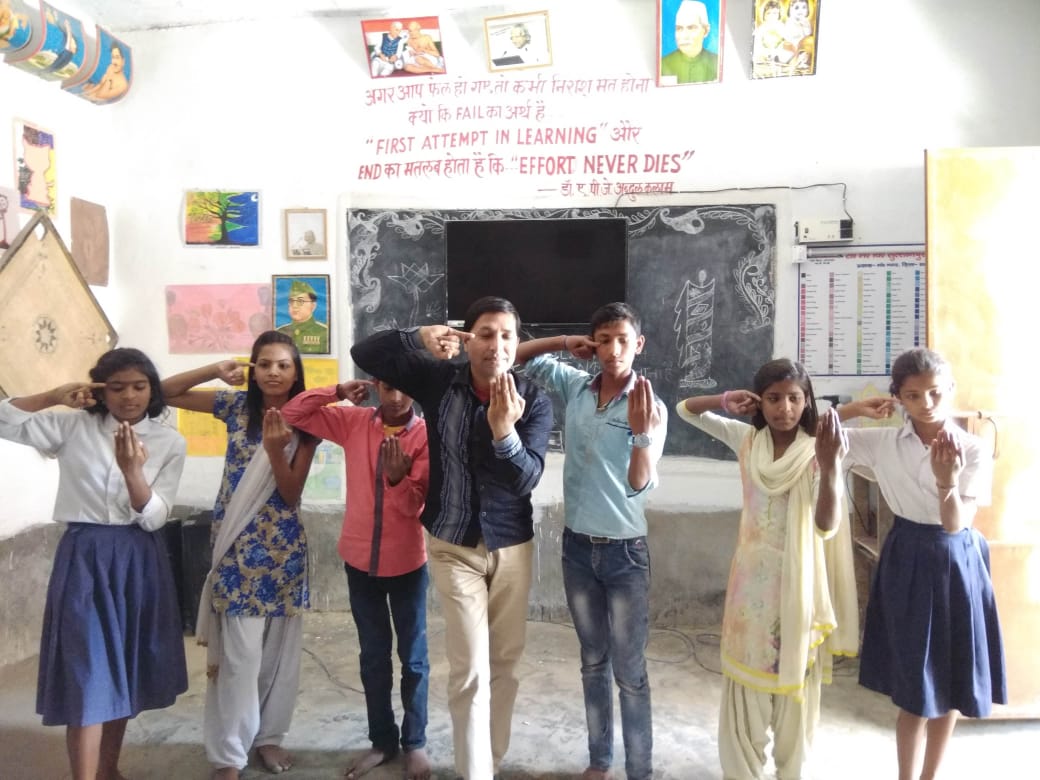
In Indian schools, theatre is mostly reserved for annual functions and forgotten the rest of the year. Used properly, it is a powerful pedagogical tool to transform passive learning into active participation.
Educational theatre aims not to train actors but to produce active learners. Students learn by experiencing ideas rather than memorising them via role play, storytelling and classroom dramas. Imagine a history class where students enact the debates of the Constituent Assembly portraying Dr. B. R. Ambedkar, Jawaharlal Nehru, Sarojini Naidu, imbibing the values that shaped the Indian Constitution. Learning made meaningful and memorable!
The National Education Policy (2020) recommends integrating arts into everyday teaching to promote holistic development. NCERT’s Art-Integrated Learning guidelines show that drama and other art forms improve classroom participation, creativity, communication and critical thinking.
Why India Needs Theatre Education Today
India’s education system has made remarkable progress in reaching doorsteps. Enrolment has improved, gender gaps narrowed and school infrastructure has expanded. However, better access is not always synonymous to better learning.
The ASER 2024 report indicates encouraging recovery in foundational learning after the pandemic, but many children continue to struggle with reading comprehension and applying concepts beyond textbook exercises.
The disconnect becomes more conspicuous when students enter the workforce. As per the India Skills Report 2025, only about 51% of graduates are considered employable. Employers consistently cite deficiencies in communication, teamwork, adaptability and critical thinking skills that conventional classroom instruction rarely develops systematically.
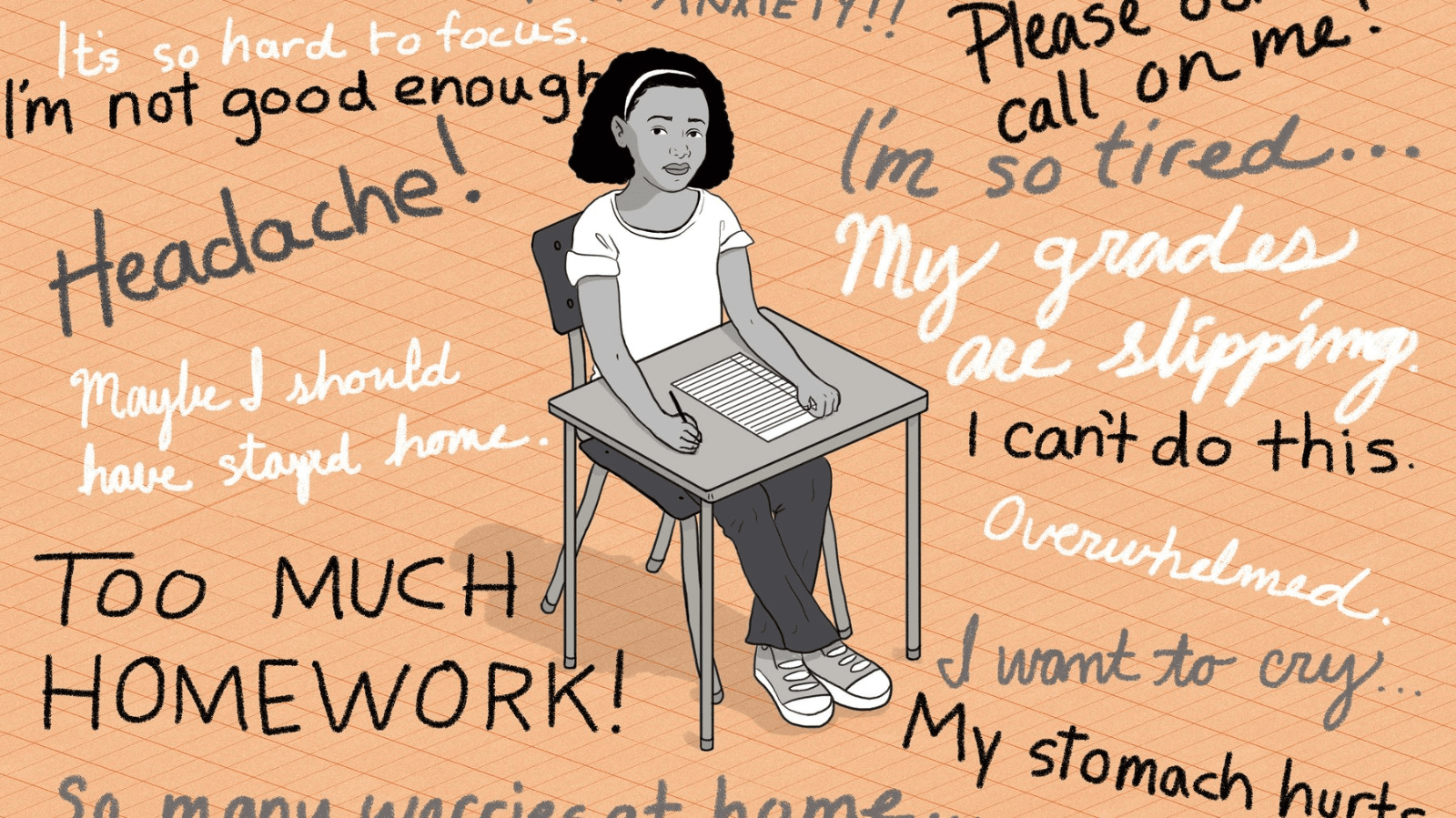
The need is also emotional. The National Crime Records Bureau (NCRB) data point to a worrying rise in student suicides, reminding us that education must support emotional well-being alongside academic success. Theatre gives children a sanctum to express themselves, build confidence and learn resilience.
From Bharata Muni’s Natyashastra to living traditions such as Yakshagana, Nautanki, Jatra, theatre serves as a bridge to India’s vibrant theatrical legacy. Bringing these traditions into classrooms can preserve cultural heritage while helping students develop the creativity, empathy and communication skills needed in the 21st century.
Theatre Through the Lens of Public Policy
The idea of learning through experience is not novel to Indian education policy. The Kothari Commission famously observed that “India’s destiny is being shaped in her classrooms” and asserted education that develops the whole individual rather than merely transmitting information.
Six decades later, the National Education Policy 2020 builds on this vision. It pushes for less curriculum overload, more critical thinking, arts woven into everyday teaching and do away with the treating extracurricular as inferior. The National Curriculum Framework (NCF) 2023 further encourages art-integrated learning as an effective pedagogical approach across subjects.
How NEP 2020 Creates an Opportunity for Theatre Education
One of the key ideas of NEP 2020 is that there should be “no hard separation between arts and sciences, curricular and extracurricular activities”. This recognizes arts not as an add-on but a fundamental part of learning. Theatre fits naturally into this approach by combining storytelling, dialogue, movement and collaboration.
NEP also promotes experiential learning through improvisation, discussion, projects and inquiry-based teaching. A social science lesson on byhearting Panchayati Raj provisions can turn into a mock Gram Sabha, where students debate local issues like waste management or water conservation, witness democratic decision making in practice.
The policy’s 5+3+3+4 curricular structure further recognises that young children learn best through play and activity. Theatre supports this developmental approach by helping children build language, imagination, social skills and emotional intelligence from an early age.
Finally, NEP places strong emphasis on preserving India’s cultural and linguistic diversity. What better than theatre ushering regional languages, folk traditions and local stories into classrooms, helping students connect with their heritage while developing communication and collaboration skills?
Beyond the Stage: How Theatre Shapes Better Learners
“Nāṭya is an imitation of the actions of the world.” (Lokavṛttānukaraṇam nāṭyam.) – Bharata Muni, Natyashastra
Theatre transcends performing arts to become a catalyst for learning. Rabindranath Tagore believed that education should engage the mind, heart and imagination, a vision reflected in plays like Dak Ghar, where children learn empathy and curiosity through experience rather than instruction.
When students perform a scene from Shakespeare’s Julius Caesar or recreate debates from the Constituent Assembly, they do more than recite facts. They analyse different viewpoints, ask questions and learn to express their ideas with confidence in front of the class- a real battle for children against the fear of public speaking.
Some things do not show up on report card. Working together on a play teaches teamwork, leadership, discipline and respect for different opinions. By setting foot in the lives of different characters, students develop empathy and emotional intelligence- skills that are increasingly valued in education, workplaces and society.
Perhaps its greatest strength is that theatre gives every child a chance to shine. A child gets to choose her niche through acting, scriptwriting, music, costume design or stage management. Theatre, in that sense, is more inclusive of different talents and learning styles.
Finally, theatre creates a safe space for self-expression. It makes civic education meaningful rather than mechanical.
Put plainly, theatre prepares students for life.
The Gaps Between Policy Vision and Classroom Reality
While NEP 2020 provides a strong vision for art-integrated education, bringing theatre into classrooms remains a challenge.
First is the clichéd gap, sadly true for most policies- implementation. Although the policy encourages experiential and art-based learning, it lacks the basic task of laying down clear guidelines or standards for integrating theatre into school education. As a result, many schools continue to treat theatre as an annual cultural activity defeating the purpose of employing it as an educational tool.
A second challenge is the lack of trained teachers. The National Curriculum Framework for Teacher Education (NCFTE) has long emphasised creative pedagogy, yet most teacher education programmes provide limited training in drama-based teaching. This manpower crunch dilutes the effectiveness of the policy.
According to the PARAKH National Assessment Survey (NAS) 2021, classroom assessment in many schools continues to focus largely on content recall, leaving little room to assess creativity, communication and collaboration. The examination-driven culture measures your success through your boards marks. It stigmatises innovation.
Resource constraints also create unequal opportunities. According to UDISE+ 2023–24, many government schools still lack basic infrastructure such as functional libraries, playgrounds and dedicated activity spaces, making theatre difficult to implement. At the same time, institutions like the National School of Drama (NSD) possess valuable expertise, but partnerships between schools and theatre organisations remain limited.
Closing these gaps will require clear implementation guidelines, teacher training, better assessment practices and stronger collaboration between schools, cultural institutions and governments.
Learning from Global Practices
Many countries have successfully used theatre to make learning more engaging. In the United Kingdom, drama is part of the National Curriculum, helping students develop communication, creativity and confidence from an early age. Finland, known for its high-performing education system, uses arts-integrated and experiential learning to encourage collaboration, critical thinking and student well-being.
India need not replicate international models. It can draw upon its own dramatic heritage through classroom adaptations of Mudrarakshasa to explore governance and diplomacy, or Abhigyanshakuntalam to introduce students to classical literature and aesthetics.
The Way Forward
Turning theatre education into a classroom reality requires focused policy action rather than symbolic support.
Living classrooms, theatre as a pedagogy tool- The National Curriculum Framework (NCF) 2023 needs to go further specifying how theatre is to be embedded across subjects and grade levels, with concrete benchmarks rather than general encouragement.
Train teachers in drama pedagogy- It cannot be simply picked up by a circular. SCERTs, DIETs and DIKSHA should equip teachers with sustained training programs to use role play, storytelling and classroom drama effectively. This is as much a question of institutional will as of resources
Reform assessment- Arguably, the most consequential reform. PARAKH has created the framework of which consistent application is required. Schools should assess communication, creativity, collaboration and critical thinking through projects, performances and portfolios, alongside written examinations.
Financial and institutional support- Existing schemes such as Samagra Shiksha can support theatre clubs, teacher workshops and simple classroom-based activities. Partnerships with institutions like the National School of Drama (NSD) and local theatre groups can further enrich learning.
Conclusion: Raising the Curtain on Holistic Education
The real question before India’s education system is not whether theatre deserves a place in schools, but what kind of education we want for our children. If we keep applauding high marks then the fish in Einstein’s analogy will keep being asked to climb the tree and the oceans will go unexplored.
Raising the curtain on theatre education, seriously and systematically, is one concrete step toward that.
Rashi Sharma is a Policy Advocacy & Research Intern at SarkariSchool.in. She is a graduate in Zoology from Delhi University and holds a postgraduate degree in Public Administration. She was a core member of Abhivyakti- theatre society of Maitreyi College. Please share your feedback at [email protected]
REFERENCES
ASER Centre. (2025). Annual status of education report (Rural) 2024. Pratham Education Foundation. https://asercentre.org/aser-2024/
Wheebox, Confederation of Indian Industry (CII), Association of Indian Universities (AIU), & All India Council for Technical Education (AICTE). (2025). India skills report 2025. https://wheebox.com/india-skills-report
Ministry of Education. (2020). National education policy 2020. Government of India. https://static.pib.gov.in/WriteReadData/userfiles/NEP_Final_English_0.pdf
National Council of Educational Research and Training. (2023). National curriculum framework for school education 2023. Ministry of Education. https://ncert.nic.in/pdf/focus-group/NCF-SE_2023EN.pdf
National Council of Educational Research and Training. (2022). Art integrated learning. https://ncert.nic.in/pdf/notice/AIL-Guidelines-English.pdf
Department of School Education and Literacy. (2025). Unified district information system for education plus (UDISE+) 2024–25 report. Ministry of Education, Government of India. https://udiseplus.gov.in
National Crime Records Bureau. (2024). Accidental deaths and suicides in India 2024. Ministry of Home Affairs, Government of India. https://www.ncrb.gov.in https://ic3institute.org/wp-content/uploads/2024/09/Student-suicides-report-Digital.pdf
National Council of Educational Research and Training. (2023). PARAKH: National Assessment Centre. https://parakh.ncert.gov.in/
Ministry of Education. (2022). National achievement survey 2021: National report. Government of India. https://nas.gov.in https://www.pib.gov.in/PressReleaseIframePage.aspx?PRID=1828301®=48&lang=2
Department of School Education and Literacy. (2024). Samagra Shiksha. Ministry of Education. https://www.edudel.nic.in/samagrashiksha/samagrashiksha.html
Ministry of Education. (2024). DIKSHA: Digital Infrastructure for Knowledge Sharing. https://diksha.gov.in
National School of Drama. (2024). About National School of Drama. https://nsd.gov.in
United Nations Educational, Scientific and Cultural Organization. (2024). Framework for culture and arts education. https://www.unesco.org/en/articles/unesco-framework-culture-and-arts-education-implementation-guidance
Department for Education. (2023). National curriculum in England: English programmes of study. Government of the United Kingdom. https://www.gov.uk/government/publications/national-curriculum-in-england-english-programmes-of-study
NITI Aayog https://niti.gov.in/sites/default/files/2026-05/School-Education-System-in-India.pdf