India’s silent crisis: why student mental health must be a national priority
By Vemana Vijaya Naga Durganjali
The year 2025 is significant for India as it celebrates 78 years of independence, marking an important milestone for our education system.With a staggering 248 million children enrolled in schools, we have the largest school-going population in the world. But along with this achievement comes a profound responsibility: the need to prioritize our students’ mental health. It’s concerning to see the signs of a “silent mental health crisis” in our schools, reflected in distressing suicide rates and the pervasive stress felt by many young learners.
In 2021, over 13,000 students tragically lost their lives to suicide, averaging more than 35 each day. A 2022 NCERT study focusing on approximately 380,000 middle and high school students found that a staggering 81% were anxious about their academic performance and exams.These statistics paint a sobering picture.
As India guides the world’s largest adolescent population, investing in school mental health becomes crucial. This investment will yield a “triple dividend” — enhancing students’ wellbeing now, benefiting their long-term health, and positively impacting future generations.
Historical Background and Policy Evolution
India has come a long way in its journey to support child mental health, even before gaining independence, with the establishment of its first Child Guidance Clinic in 1937. The launch of the National Mental Health Programme (NMHP) in 1982 marked a significant step forward, and by 1996, the District Mental Health Programme (DMHP) started incorporating school counselling and awareness initiatives.
The recent National Education Policy (NEP) 2020 and the Ministry of Education’s “Manodarpan” program have made student well-being, counselling, and teacher training in psychosocial support a priority. Additionally, the Ayushman Bharat School Health & Wellness Programme, which began in 2018, aims to enhance the health of school children. These initiatives reflect a growing understanding that education and mental health are closely intertwined.
Over the past 75 years, India has indeed laid the groundwork for school health initiatives. However, the journey has been uneven and sometimes fragmented. Many government reports reveal that various planned school health activities like screenings and life-skills classes have not always been executed as envisioned. Often, programs take a top-down approach, concentrating on basic screenings without offering ongoing mental health support.
While life-skills curricula have been developed, there is still a noticeable lack of formal training for teachers to identify and refer students in mental distress.
Moreover, comprehensive national guidelines to transform every school into a “health-promoting” environment are still in the works, highlighting the need for a more cohesive and compassionate approach to mental health in education.
Current Status: Data and Evidence
The current situation regarding mental health among our youth is indeed troubling. Various studies conducted in India reveal that approximately 23–24% of schoolchildren are facing diagnosable mental health issues. According to the National Mental Health Survey from 2015 to 2016, around 7.3% of adolescents aged 13 to 17 are dealing with psychiatric conditions.
This means that in a typical classroom of 40 students, we might have 8 to 10 individuals struggling with challenges such as depression, anxiety, or ADHD—many of which often go unnoticed. The COVID-19 pandemic has only intensified these struggles, with a significant increase in anxiety and stress levels among adolescents during school closures and the disruption of exams.
Academic Pressure
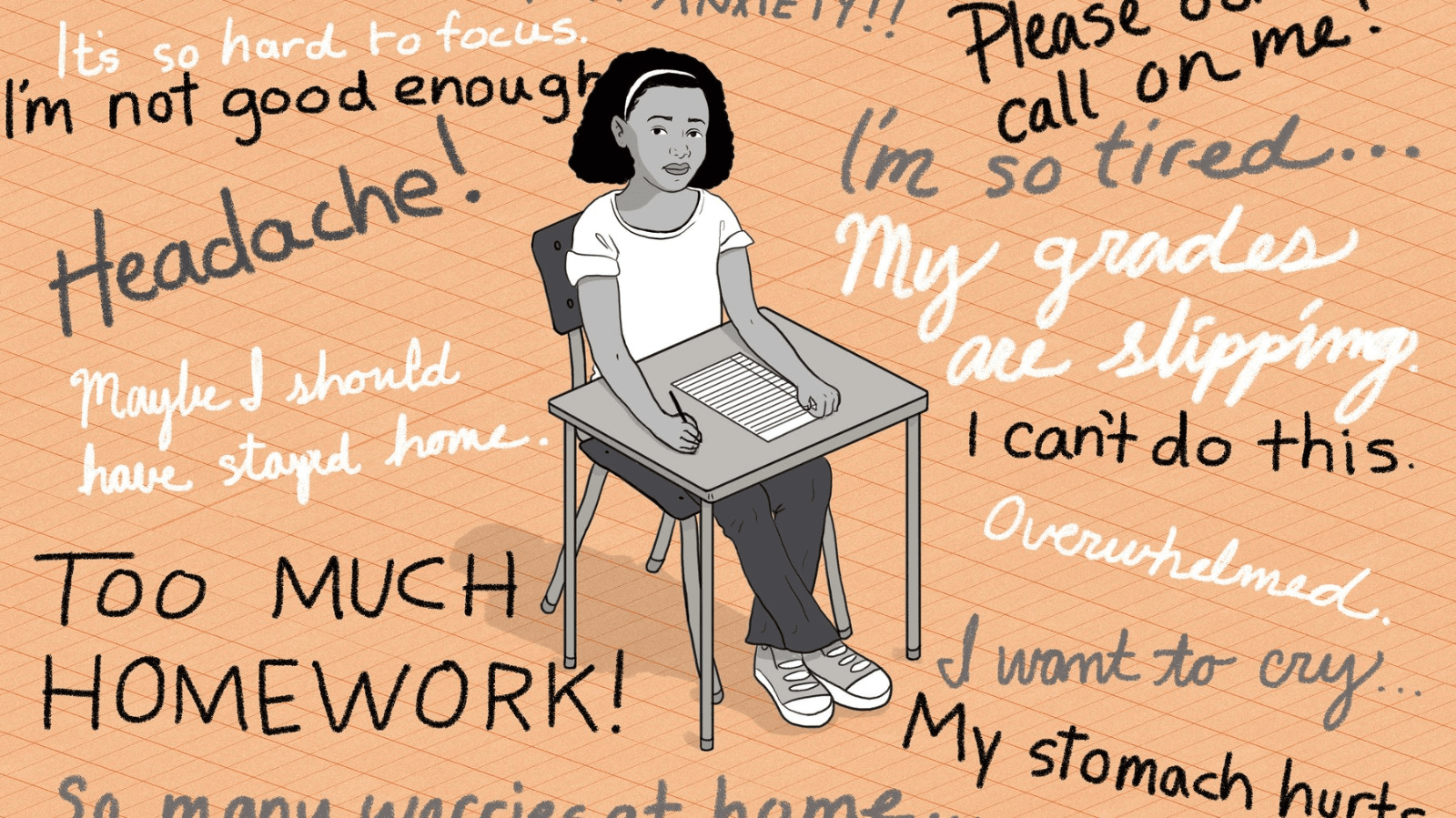
Recent surveys reveal that the pressure students face in India primarily stems from academic challenges. In the NCERT “Manodarpan” mental health survey conducted from January to March 2022, a staggering 81% of students cited schoolwork—particularly exams and grades—as a source of anxiety.
Many students shared their struggles with frequent mood swings and feelings of being overwhelmed by expectations. Heartbreaking statistics from the National Crime Records Bureau (NCRB) indicate that a student dies by suicide every 40 minutes.
Resources and Workforce
The country has a concerningly low number of psychiatrists, with only about 0.29 per 100,000 people, which falls drastically short of what the World Health Organization recommends. Although the 2017 National Mental Health Care Act mandates that schools should have counseling facilities, over 60% of them fall short, lacking any mental health professional on their staff.
On a brighter note, the District Mental Health Programme (DMHP) has expanded its reach to 704 districts, and the government has introduced Tele-MANAS, a national tele-mental-health helpline that offers round-the-clock counseling.
School Environment
The atmosphere within a school can have a profound impact on a student’s overall well-being, sometimes in ways we might not even recognize. Challenges like bullying, test-related stress, hazing, and feelings of loneliness can plague students, contributing to their mental health struggles. Unfortunately, for many, the “school climate” does not foster the happiness and safety they deserve.
On a brighter note, there are initiatives in some states, like Delhi’s Happiness Curriculum and Kerala’s student clubs, that demonstrate a hopeful path forward.
Challenges and Gaps
India’s school mental health system clearly faces significant challenges that impact our students deeply. Firstly, there’s the issue of access and equity. In our cities and wealthier regions, mental health services are much more accessible, while rural and remote areas often lack even a single counselor or safe space for students. This disparity is alarming.
Secondly, we must address the stigma and lack of awareness surrounding mental illness in India. Many parents and teachers often choose silence over confronting these issues, mistakenly labeling symptoms as mere “laziness” or “indiscipline.” Even when counseling services are available, students frequently hesitate to seek help for fear of being judged. Furthermore, there is minimal training for teachers in psychosocial support, meaning that early warning signs often go unnoticed in the classroom.
Thirdly, we face a shortage of resources. With only about 1% of the health budget allocated to mental health, the availability of school psychologists is frighteningly low. The ideal standard of “one school counselor per 1,000 students” is far from being met. The economic loss due to mental health conditions, between 2012-2030, is estimated at USD 1.03 trillion.
Lastly, there’s a noticeable gap between policy and practice. While policies such as the National Education Policy (NEP) 2020 and the Ayushman Bharat School Health Program exist in theory, their implementation often falls short. While we are seeing some improvement in coordination between the Ministries of Education and Health, progress remains slow and often disconnected.
Furthermore, much of the focus has concentrated on older students, with almost no programs dedicated to early childhood mental health or preschool emotional development.
These challenges require our immediate attention and action, as the mental well-being of our children is at stake.
Way Forward: Policy and Action Points
To create a brighter future for our children, India needs to evolve its approach to school mental health, transforming isolated efforts into a unified system that truly supports every student. Here are some heartfelt recommendations to consider:
National School Mental Health Policy– It’s essential to establish a dedicated policy or enhance the NEP that ensures every school has a consistent mental health protocol. This policy could outline staffing norms, such as appropriate counselor-to-student ratios, set curriculum requirements for life skills education, and implement clear crisis procedures, including suicide prevention strategies. We should also connect education and health budgets to secure necessary funding.
Expand the Counseling Workforce – A commitment to training thousands of school counselors and psychologists is crucial. Providing incentives or fellowships for psychology graduates who are willing to work in schools can make a real difference.
Teacher Training and Student Curriculum– Integrating mental health literacy into teacher education programs (like B.Ed.) and ongoing in-service training is vital. Every teacher should be equipped with the skills to recognize when a student is struggling and learn how to teach essential life skills like self-awareness, coping strategies, and empathy from an early age.
Parental and Community Engagement- It’s important to destigmatize mental health through awareness campaigns in schools and across media platforms. We should encourage parents to engage in conversations about mental health during meetings with teachers.
Promote School Safety and Support- Schools should firmly uphold anti-bullying laws and ensure that every institution has grievance redressal cells, peer support groups, and safe reporting options. Implementing practical policies, such as “no-detention” rules and multiple chances for exams, can help alleviate the heavy burden that academic pressure places on students.
Most importantly, our approach must be solution-focused and nurturing: while we acknowledge the challenges posed by mental health issues, we should also celebrate the strength and resilience of our youth. Initiatives that intertwine mental health with physical wellness like promoting sports and good nutrition can normalize the conversation and reduce stigma. As we look toward the future, perhaps framed by our Vision 2047 that envisions “healthy happy children”— it’s critical that we treat mental health with the same priority as nutrition and sanitation in our schools.
Conclusion
As India celebrates its 78th year, we stand at a crossroads for school education. The government has laid down many good intentions for mental well-being, but turning them into reality requires urgency and coordination. The current status – millions of anxious students, thousands of school suicides, and inadequate support – is unacceptable for a rising India. Yet, the progress so far and global best practices show a path forward. By making mental health an integral and fully-funded component of school policy, India can not only prevent tragedies but also unlock the full potential of its youth. The vision must be clear: schools as safe, supportive spaces where every student has access to emotional care, opportunities to build resilience, and the promise of a healthy mind just as much as education.
Every investment in a child’s mental wellness is an investment in a brighter future for our society as a whole. Together, we can create an environment where every child thrives.
Vemana Vijaya Naga Durganjali is a Policy Advocacy and Research Intern at SarkariSchool.in. She holds a bachelor’s degree in Economics and Political Science from Indraprastha College for Women, University of Delhi. For feedback or comments, please write to: [email protected].
References:
- Benny, N. (2022, October 10). World Mental Health Day 2022: NCERT survey shows 81% school students anxious about studies, exam results. The Indian Express. https://indianexpress.com/article/education/world-mental-health-day-2022-81-school-students-anxious-about-studies-and-exam-results-shows-ncert-survey-8198381/
- Mehra, D., & Sharma, S. (2022). Mental health interventions among adolescents in India: A scoping review. Healthcare, 10(2), 337. https://doi.org/10.3390/healthcare10020337
- Ministry of Education, Government of India. (2020). National Education Policy 2020. Ministry of Education. https://www.education.gov.in/
- Ministry of Education, Government of India. (2024, July 1). UDISE+ 2023–24: School education statistics. Press Information Bureau. https://www.pib.gov.in/PressReleasePage.aspx?PRID=2097864
- Ministry of Health and Family Welfare, Government of India. (2018). Ayushman Bharat – Comprehensive School Health Programme Guidelines. https://main.mohfw.gov.in/
- National Crime Records Bureau. (2022). Accidental deaths & suicides in India 2021. Ministry of Home Affairs, Government of India. https://ncrb.gov.in/
- Vardhan, C., Charan, M. L., Kumar, K., & Anand, A. (2025). Beyond grades: Integrating mental health into education. Annals of Neurosciences, 32(2), 73–74. https://doi.org/10.1177/09727531251332710
- World Health Organization. (2020). Policy brief: COVID-19 and the need for action on mental health. World Health Organization. https://www.who.int/publications/i/item/WHO-2019-nCoV-MentalHealth-2020.1
- World Health Organization. (2021). Adolescent mental health: Fact sheet. World Health Organization. https://www.who.int/news-room/fact-sheets/detail/adolescent-mental-health
- Mental health and well being of school students (A survey,2022): https://share.google/JITarmZZQq2Wsk0OD
- Advancing mental healthcare in india (2025) : https://share.google/GIsLdl8oInYzWtw9k