From Phule’s Classroom to ISRO’s Control Room: Bridging the Women in STEM Gap in India
By Nimmi Verma
In Vedic age, education was not reserved exclusively for men but women like Gargi, Maitreyi, Lopamudra established themselves as great debaters of philosophy, as mentioned in Rig Veda. Later the wheels of time churned and changed the spectrum of women’s life and a phrase whispered the Indian households, “Ladki ho,itna padh ke kya karogi…” reflecting the perception of women’s education in India where it imposes that learning is not a right but a favour granted to her. Education was a privilege confined to men and women were bonded in the chains of patriarchy and tagged as being the “pride of the family”.
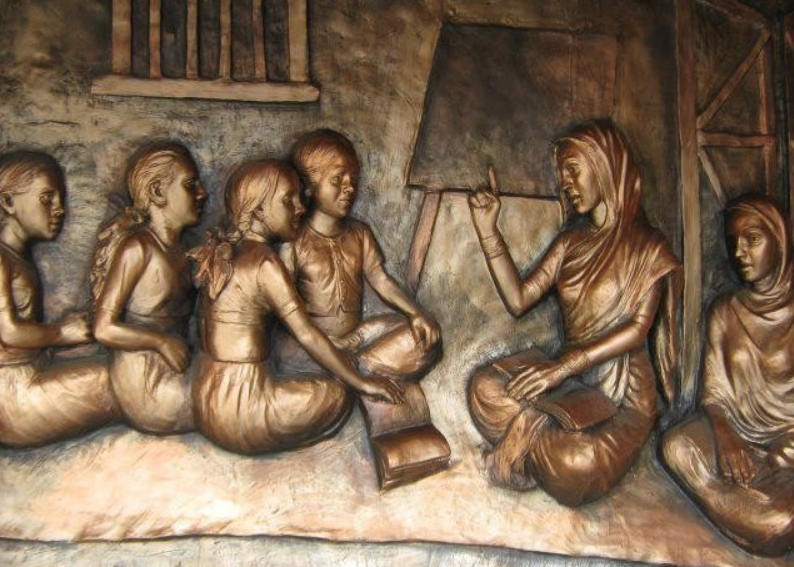
The story of women’s education in India is revolutionary as the path was not merely about breaking social taboos but to empower, encourage and establish a well-defined confidence among women. One such story is of Savitribai Phule who dared to open the doors of first girl’s school with only nine students in Pune, Maharashtra, but given the nature of the society her step was ridiculed instead of being appreciated. Yet, from a small classroom of Phule to ISRO’s control room, a women introspected her strength and gradually shifted to recognizing education as a basic right, this progress paved way for policies like NEP 2020 in the 21st century which aims to ensure that every girl in India claims her right to learn. Despite the introduction of such progressive policies, India has not yet witnessed significant growth in female participation in STEM (Science, Technology, Engineering, and Mathematics) fields. This article will discuss the reasons behind this gap and explore possible solutions.
Widening disparities
From centuries, women were denied of opportunities like attending schools, colleges and universities. Yet, a gradual transformation in society, culture, policies changed the destiny of women. Various progressive reforms and mindset shift, encouraged women to opt for advance studies like STEM which not only benefitted women but society as well.
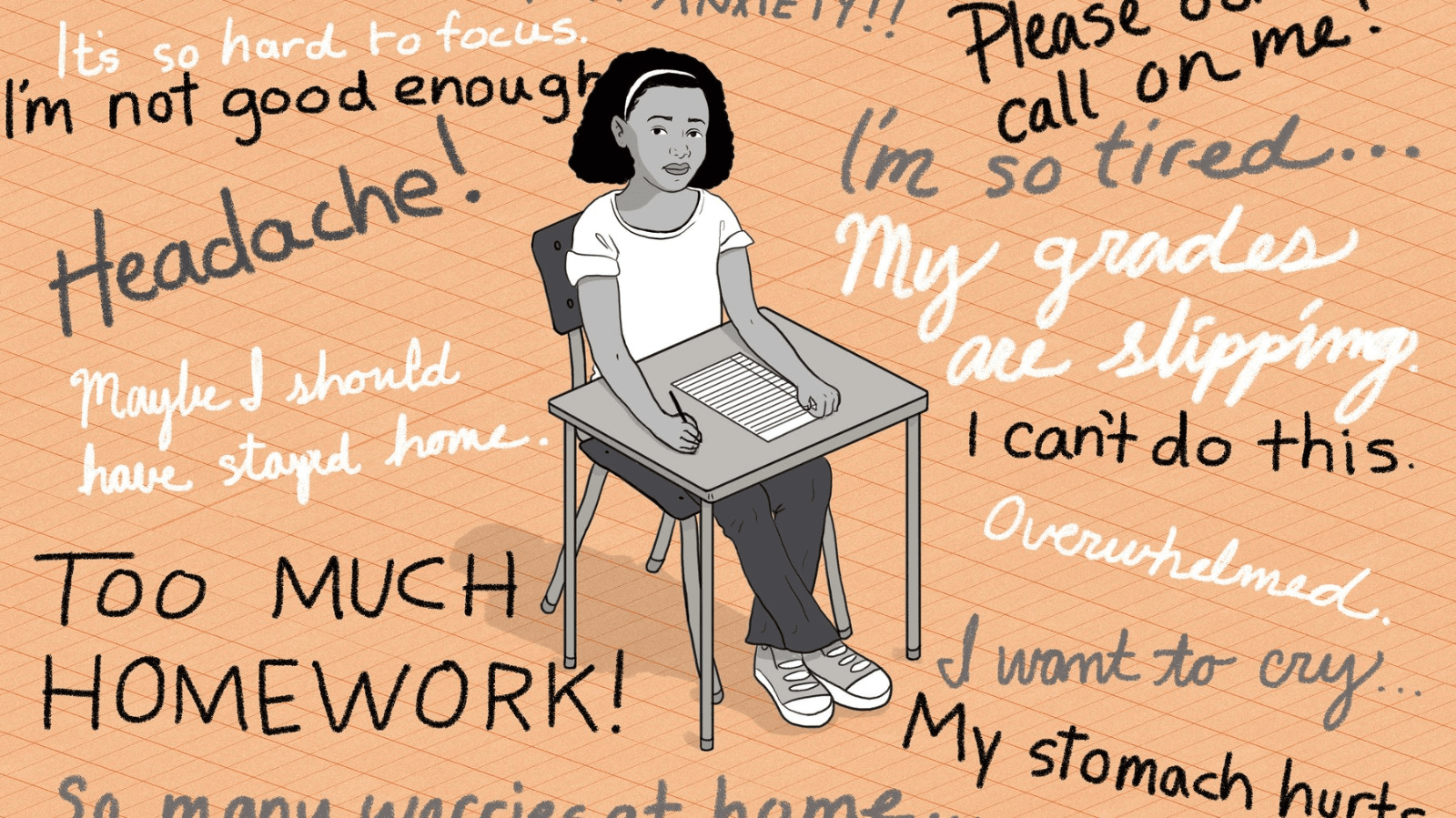
Despite advancements in policies, women still lag behind in science and advance studies. Factors like gender stereotyping, limited mentorship, lack of role model, biased perception against competencies of women as well as cerebral disparities, creating significant gap between ratio of men and women in professional STEM field. Even, when women choose STEM education, a subtle yet powerful difference persist, as is the story of Rosalind franklin, who was central in discovery or equal contributor in the DNA model yet her work was undervalued. It shows how prevalent sexism ignores a women’s contribution to science. In today’s time, widening gap of women in STEM is not because of cerebral incapacities but due to persistent stereotypes and invisible barriers. Coding, engineering, mathematics are considered to be a technical subject and “not for women” such thinking affects women at core, leaving them underrepresented despite capabilities.
Here, the vision of Savitribai becomes a powerful tool, where she believed in breaking systemic barriers and achieving equal opportunities. She fought against visible discrimination in 19th century but in 21st century, the structural and societal divide remains invisible yet powerful. The complex and multi-layered gender relations in society impact female’s access to STEM in higher education and employment. Only by translating Phule’s vision into action in sphere of STEM in 21st century will help women to dismantle the barriers.
Cost of exclusion
Statistics reveal a reality we can no longer overlook. A figure of 42.6% of STEM graduates in higher education are women but only 18-20% make up to STEM professions, which shows the underrepresentation of women in STEM (Ministry of education, 2022). The roots are deeper, as according to UNESCO’s global education monitoring report (2022) only 35% STEM graduates are women globally. Major hurdles for women in this field is the reason of decline in trajectory of country, as roadblocks like early marriage, gender stereotypes still overpower the classrooms and workplace. Young girls find themselves without mentorship, scarcity of role models which shadows their confidence to step in STEM.
Several policies exist like scholarships, incentives, gender inclusion funds under NEP 2020 but the outcomes show presence of political blind spots. Availability of basic infrastructure like laboratories, resources, safe schools and workplaces are prerequisites. Most importantly, the cost of these intergenerational societal disparities leads to never ending vicious cycle of poverty in country like India, where it is held that only men can be sole breadwinner in the family. Often it is said that ‘poverty wears a female face’ it can be seen when a family is forced to choose which child’s education to fund, it is the girl who is asked to step back, causing women to remains uneducated or distant from grabbing opportunities of advance studies. These norms exacerbate the rigid nature of social norms and bind women in unsaid barriers.
From minds to actions
India’s classrooms, laboratories, boardrooms are facing a wind of silent revolution where women are stepping forward in a sphere of STEM, which were earlier inaccessible. This significant flare of courage shows the glimpse of Phule’s determination of not turning back. Her vision not just demanded access to classrooms, but freedom to spread wings in industries, laboratories and innovation hubs. Women now have courage to confront prejudice and claim rightful place in STEM. Gender-sensitive pedagogy to build confidence among girls in science and mathematics can prevent leakages at school level.
Government and policy makers came up with vivid framework to encourage women in STEM by schemes like Vigyan Jyoti to cater needs of school girls from aspirational districts including science camps, lab visits to reduce gender gaps. Women scientist scheme, KIRAN which provides research grants, fellowship for women, SERB POWER fellowships, and research grants to women researchers to showcase their leadership skills in science. In order to strengthen the infrastructural facilities policies like CURIE, WISE (Women In Science and Engineering in India) introduced to bridge academia – industry gaps.
Policy without role models is a vision without action. India is full of such role models like Dr. Tessy Thoma, “Missile woman of India”, became first women to head missile project at DRDO as project director of Agni-IV and Agni-V, Geetha Manjunath, combined AI with healthcare to develop non-invasive breast cancer detection, Prof. Sunita Sarawagi of IIT Bombay contributed in computer science and data mining.
These women shattered stereotypes and captured the world’s imagination by reminding us that opportunity and talent are not scarce, what often scarce is the systemic support.
Path beyond policy
Despite steps taken, only 13.5% of STEM faculty members in India are women (covering 98 universities/institutes). Mirrors a presence of prominent vacuum in inclusivity and equity in women’s education especially in STEM. Hence, to fill this gap, we should not only focus on accessibility but also on quality and practical education. Ensuring gender sensitization workshops, will break the taboo associated with women and will also help in making gender-sensitive classrooms. As girl goals (a report of UNICEF) recommends -Firstly, to make support for adolescent girl’s voices, advocacy i.e. enabling them as leaders to give insights of grassroot problems to be identified in policy making for direct benefits. Secondly, to have explicit targets on outcomes and investing in better data and evidence is key as a laser focus on closing education, skills and training gaps for girls, especially in STEM (digital tech). Early exposure to coding, robotics and research opportunities will enhance the girls to lead in laboratories and policymaking. These initiatives of providing better opportunity can only be done through targeted allocation of resources and efficient gender budgeting. Collaboration of public sector and civil societies will largely benefit the objective of policy implementation to the ground levels. A multi-level policy approach which is comprehensive and holistic in nature, compiling education access, financial support, cultural shifts and monitoring is essential to ensure women are not just participants, but leader in STEM.
Awake, arise and educate
As Jawaharlal Nehru has said – “If you educate a man, you educate an individual but if you educate a woman, you educate the whole family”. This reflects the story from where Indian women have come from – A small classroom of Savitribai Phule, where her rebellious and determined steps have turned Indian women to design satellite at ISRO, lead research in biotechnology, acquiring top ranks in UPSC. Those hurdles are now carried on as an ornament of legacy, defining strength that all women carry in themselves. Execution of policies and role models like Ms. Tessy Thomas and Ms. Geetha is what India needs right now for systemic, sustained and scalable growth. NEP 2020 has provided the ladder to step up and it will be climbed through equity, reliance and vision with continuous efforts.
Nimmi is a Policy Advocacy and Research Intern at SarkariSchool.in. She holds a BSc in Life Sciences from Sri Venkateswara College, University of Delhi, and is currently pursuing a Masters in Public Administration from IGNOU. Please write your comment at [email protected].
References
- Government of India, Ministry of Education. (2020). National Education Policy 2020. New Delhi: Government of India. Retrieved from https://www.education.gov.in/sites/upload_files/mhrd/files/NEP_Final_English_0.pdf
- Ministry of Education, Government of India. (2022). NEP 2020: Two years of implementation. Department of School Education & Literacy. https://www.education.gov.in
- UNICEF. (2025). Girl goals: Taking stock for girls. UNICEF Data. https://data.unicef.org
- Sindhu, K., Siby, K. M., Santhosh, R., & Karunakaran, N. (2025). Gender disparities in STEM education and patterns of female participation in India. South Eastern European Journal of Public Health. https://doi.org/10.70135/seejph.vi.4673
- Wakdikar, S., Aggarwal, R., & Sharma, P. (2024). Hurdles and challenges perceived by women scientists in India. Journal of Women Empowerment and Studies, 4(3), 27–38. https://doi.org/10.55529/jwes.43.27.38
- ISRO (2019). Chandrayaan-2: Meet the women behind India’s moon mission. Indian Space research organisation.
- SME Street (2023). Government initiatives to foster women’s participation in STEM courses.
- Department of science and technology (DST) (2023). Vigyan Jyoti scheme. Ministry of science & Technology, Government of India.