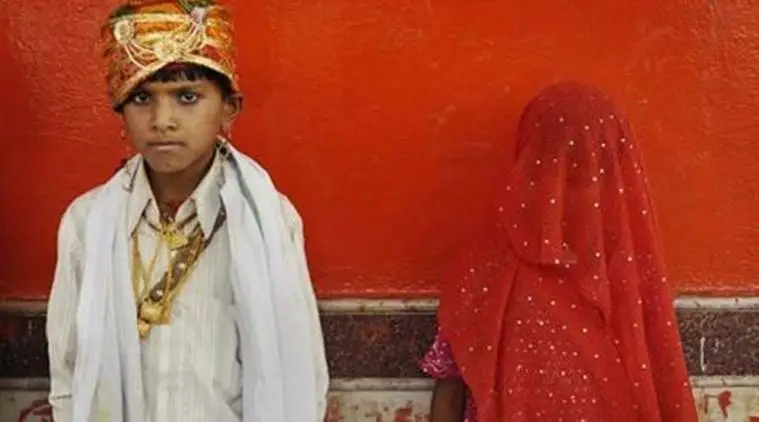
Child marriage in India and its impact on girl’s education and empowerment
By Urwashi Pandey
Many of us who live in urban areas believe the concept of child marriage has long been left behind in our country. We grew up believing this concept is now only confined to history books or remote villages, but this assumption is far from the truth. Even today, in many parts of India, child marriages are a common practice due to poverty, social customs and traditions, financial burden, and social pressure, even after the existence of the Prohibition of Child Marriage Act, 2006.
According to the UNICEF report (2023), child marriage is becoming less common in India, but the country still accounts for one in three of the world’s child brides. Although the number has fallen over the years, the practice exists, which is a huge issue for India in this day and age.
Why is Girl Child Marriage still practiced? How did it start?
Contrary to what many people believe, child marriage was not always a common practice in ancient India. Some historians argue that during the Vedic period, girls were educated, allowed to choose their partners, and married only after they were of age. Texts like the Rig Veda highlight how women were active participants in society, well-versed in knowledge, and responsible for household management. Hymns of that time suggest that marriage was seen as a partnership of two grown individuals who had completed their education and training.
The change we all know of now happened over centuries. Social customs began to prioritize family honor, control over women’s sexuality, and economic considerations over personal choice and education. By the time India was under British Rule, child marriage was a widely common practice. The minimum legal age of a girl child marriage was set at 14 and later revised to 15 after independence. The age was again changed in 1978; the age was increased to 18 for girls and 21 for boys, which was a reflection of the growing concerns of the time regarding education and health.
Although the laws were made, child marriage still persisted in many regions of India due to deep-rooted poverty, lack of awareness, and, most importantly, religious and cultural interpretations.
For example, a Muslim personal law enacted in 1937 permitted child marriage under certain conditions, which fueled debate about a uniform marriage law and religious freedom. Even today, some groups challenge the minimum age of marriage set by the government, arguing that marriage should be a personal matter rather than a state intervention.
How Prevalent is Child Marriage in India Today?
Despite decades of legal reforms, early child marriage remains a serious concern in India. Prevalence of child marriage is often measured by the proportion of women aged 20-24 who were married before the age of 18. By this standard, India still sees around 1.5 million girls under 18 get married every year. According to NFHS-5 (2019-2021), 23.3% of women were married before the age of 18. This shows a significant drop from 47% in 2005-2006, but this number is still alarmingly high given the Indian population.
Data shows that the median age at marriage is rising from 17.2 years in 2005 to 19.2 years in 2019 for women and from 22.6 to 24.9 years for men. The tenacity of child marriage is highly unequal across communities:
- Girls with little or no education face the greatest risk. Nearly half of the girl child without any schooling are married off before they reach the age of 18; on the contrary, only 4% of women with higher education are married before the age of 18.
- 40% of women from poorer households are married by the age of 18, whereas only 8% of women from the wealthiest households are married by 18.
- Caste and tribal communities are shown to have a higher prevalence; about a quarter of SC/ST women are married below the legal age.
- States like West Bengal, Bihar, and Tripura report the highest levels, with more than 40% of girls getting married before they reach adulthood.
The National Crime Records Bureau (NCRB) has also documented a steady increase in cases registered under the Prohibition of Child Marriage Act (PCMA), 2006 in 2017, there were 395 cases, whereas in 2021, the number has increased to 1000.
How does this affect a girl child and her education?
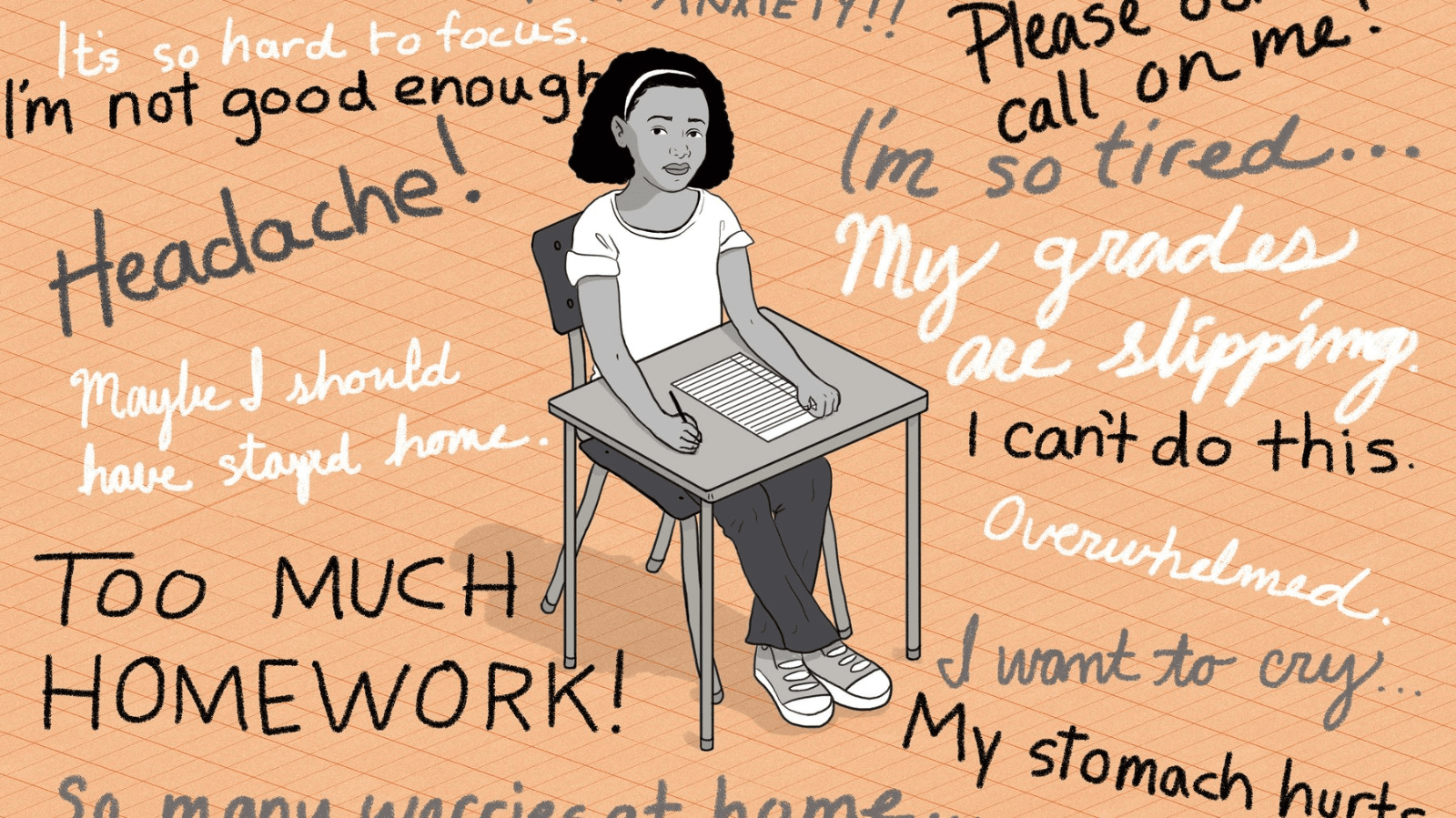
Many students are pulled out of school by class 8, ending their academic prospects, and any career goals they may have are tarnished.
Denied education and employment make the girl dependent on her family, husband, and in-laws; this can cause more issues of poverty and gender inequality in the family, as women are confined to their traditional roles.
Young brides often lack power in family dynamics; this can make them more susceptible to becoming victims of domestic violence, sexual abuse, and isolation. Young brides are often pressured into early pregnancy, which can lead to maternal mortality, obstetric complications, and infant health risks.
Government initiatives to prevent child marriages
Indian governments have tried to tackle the issue of child marriage through both legal measures and social schemes. The Child Marriage Restraint Act of 1929 was the government’s first attempt which had a limited impact on society, but it was later replaced by the Prohibition of Child Marriage Act, 2006 (PCMA). This empowered state governments to appoint Child Marriage Prohibition Officers who will prevent child marriages, gather evidence for prosecutions, counsel families, and raise awareness in communities.
Under the Prohibition of Child Marriage Act, 2006 (PCMA), a “child” is defined as a girl below the age of 18 and a boy below the age of 21. Anyone who performs, conducts, directs, or abets a child marriage can face up to two years of imprisonment and/or a fine of up to ₹100,000. The voidability of the marriage is an option for the child; a petition for annulment can be filed within two years of the child reaching adulthood (i.e., before reaching the age of 20). If the petitioner is still a minor when filing, the petition can be filed by their guardian or next friend, along with the Child Marriage Prohibition Officer.
Section 4 empowers the district court to order maintenance for the female contracting party while granting a decree of annulment. If the male contracting party is an adult, he may be directed to pay maintenance until she is remarried; if he is a minor, the responsibility lies with his parent. The courts set an amount based on the girl’s needs, her lifestyle during the marriage, and the paying party’s income; the payments may be monthly or as a lump sum.
In December 2021, the government introduced the Prohibition of Child Marriage (Amendment) Bill to raise the minimum marriage age for women from 18 to 21 years, citing health and education benefits. The Bill was referred to the Parliamentary Standing Committee after extensive debates in both the Lok Sabha and Rajya Sabha, where members discussed the need for a uniform minimum age across personal laws and the importance of balancing religious freedoms with child rights.
The government has launched awareness campaigns, such as Haryana’s 1994 scheme Apni Beti, Apna Dhan, which offered a financial reward to families who kept daughters unmarried till the age of 18. Beti Bachao Beti Padhao, launched in 2015, is a national-level scheme under Mission Shakti, which discourages child marriage as one of its core goals. It combined mass media campaigns, community mobilization, and conditional cash transfers to delay marriage and ensure girls get educated. As of 2022, it covers 640 districts with district-level multi-sectoral action plans to improve sex ratios and girl child education.
According to NCRB Crime in India 2021, 1050 cases were registered under PCMA, up from 395 in 2017, showing both continued prevalence and rising reporting. Institutions such as the National Commission for Protection of Child Rights (NCPCR) conduct consultations and awareness drives; they also have a helpline like CHILDLINE1098, which works as a channel for reporting crimes of child marriage.
Conclusion-
Many of us in the urban life believe that child marriage is a relic of the past. Unfortunately, the reality seems to tell a different story, as child marriages continue to be practiced in several regions of India. India has a strong legal framework, but the weak implementations allow such practices to continue.
Addressing child marriage is not only the government’s responsibility but also a social duty of the citizens, which requires citizens’ active participation through communication, vigilance, and raising awareness through open conversations. Early girl child marriage requires a multi-layered approach that combines law, education, and community actions. The government can introduce financial incentives in the form of scholarships for families who ensure their daughters complete higher secondary or college before marriage. Marriage registration can be digitally linked to and cross-verified with school or college records. This can help prevent certificates from being issued and closing a loophole in enforcement. At the grassroots level, local panchayats and women’s self-help groups could create education trusts to pay for a girl child’s education, which would reduce the financial pressure on the families. Along with these measures, school-based awareness programs and collaborations with NGOs, religious and community leaders can help create a shift in mindsets. Only with citizen participation and government policies can we help protect the education of the girl child and secure the skilled workforce needed for national development.
As India aspires to become a Vishwa Guru and a leading global power, issues such as child marriage and denied girl child education pose a serious obstacle. When a young girl is pulled out of school and married early, the workforce decreases and loses potential skills and talent, which would help drive the nation forward. Child marriage is a violation of rights as well as an economic setback. It is important to address such issues head-on to achieve the nation’s goal of becoming a global power by ensuring that women of our country are empowered by education and have an equal space in ensuring national development.
Urwashi is a Policy Advocacy & Research Intern at SarkariSchool.in. After completing her schooling at DPS Indirapuram, Urvashi is pursuing a Bachelor of Arts (Political Science Hons. with History) from Deshbandhu College, University of Delhi. Please share your comments at [email protected].
Reference-
- UNICEF India. (n.d.). Ending child marriage and adolescent empowerment. UNICEF India. https://www.unicef.org/india/what-we-do/end-child-marriage
- Bengesai, A. V., Amusa, L. B., Makonye, F., & Hotchkiss, D. (2021). The impact of girl child marriage on the completion of the first cycle of secondary education in Zimbabwe: A propensity score analysis. PLOS ONE, 16(6), Article e0252413. https://doi.org/10.1371/journal.pone.0252413
- Vikaspedia. (n.d.). Child marriages. Social Welfare, Vikaspedia. https://socialwelfare.vikaspedia.in/viewcontent/social-welfare/social-awareness/child-marriages?lgn=en#section4
- UNICEF South Sudan. (n.d.). Early marriage and its devastating effects. UNICEF. https://www.unicef.org/southsudan/stories/early-marriage-and-its-devastating-effects
- UNFPA India. (n.d.). End the cycle of child marriages with empowerment, education and employment. UNFPA India. https://india.unfpa.org/en/news/end-cycle-child-marriages-empowerment-education-and-employment
- Government of India. (2007). The Prohibition of Child Marriage Act, 2006 (Act No. 6 of 2007). Ministry of Women and Child Development. Retrieved from https://www.indiacode.nic.in/bitstream/123456789/15943/1/the_prohibition_of_child_marriage_act%2C_2006.pdf
- PRS Legislative Research. (2021, December 21). The Prohibition of Child Marriage (Amendment) Bill, 2021. Retrieved from https://prsindia.org/billtrack/the-prohibition-of-child-marriage-amendment-bill-2021